Sabalenka Holds No.1 as Raducanu & Eala Surge in WTA Rankings
Sabalenka stays at No. 1 as Raducanu and Eala climb the WTA rankings, with Noskova also leaping ten spots. The shifts set the stage for the upcoming Japan Open.
When talking about Aryna Sabalenka, a Belarusian professional tennis player famous for her booming serve and aggressive baseline play. Also known as Sabalenka, she blends raw power with relentless conditioning, making her a standout on the WTA Tour, the global circuit for women’s professional tennis. Her rise sparks conversations about how elite athletes manage stress, speed, and endurance – topics that echo in motorsport, where drivers also fight gravity and fatigue.
One key element of Sabalenka’s success is her power serve, a serve that regularly exceeds 120 mph and forces opponents onto the defensive. This mirrors the thrust you feel in a high‑performance car; both rely on explosive force and precise timing. The serve’s physics—ball spin, launch angle, and kinetic energy—are comparable to a race car’s torque curve, where every fraction of a second matters. Understanding this link helps fans appreciate why Sabalenka’s matches feel like a sprint on a short circuit.
Beyond raw power, Sabalenka’s training routine emphasizes agility, core stability, and cardiovascular durability. She spends hours on plyometrics to sharpen quick direction changes—much like a rally driver navigating twisty roads. The sports performance demands are similar: MotoGP riders endure up to 5 g forces, while Sabalenka sustains high heart rates during long rallies, proving that top athletes across disciplines share a common need for elite conditioning.
Mentally, she approaches each match like a race strategy. Pre‑match scouting, in‑match adjustments, and post‑match analysis echo the data‑driven tactics used by racing teams. For example, just as a driver might study slipstreaming to gain a passing advantage, Sabalenka studies opponent patterns to time her aggressive forehand for maximum impact. This crossover of strategy highlights how high‑level sport—whether on court or track—relies on careful planning and split‑second decisions.
Sabalenka’s recent performances in Grand Slam events also illustrate how pressure shapes elite play. Reaching the later stages of the Australian Open and Wimbledon, she has shown that mental resilience can tilt the balance between victory and defeat. In motorsport, drivers talk about “the wall of noise” at big circuits; for Sabalenka, the roaring crowds at Centre Court serve a similar role, testing focus and composure.
When you compare her to a Formula 1 car, the analogy deepens. A Formula 1 chassis is lightweight, built for speed, and tuned for cornering—just as Sabalenka’s footwork is quick, her racket light, and her strokes tuned for rapid acceleration. Both require constant feedback loops: a driver feels tire grip, a player feels court traction. This shared feedback loop drives continuous improvement, whether through lap time shaving or match point conversion.
Fans often wonder how Sabalenka maintains such a high‑intensity output throughout a grueling season. The answer lies in periodized training, nutrition, and recovery protocols—principles also championed by endurance racers. Structured rest days, ice baths, and targeted strength sessions keep her muscles primed for the next tournament, just as a pit crew schedules tire changes and engine checks to keep a car at peak performance.
Below you’ll find a curated set of articles that explore these themes in detail. From the science behind power serves to the parallels between tennis conditioning and motorsport endurance, each piece offers a fresh angle on why Aryna Sabalenka stands out as a benchmark for athletic excellence across high‑speed sports.
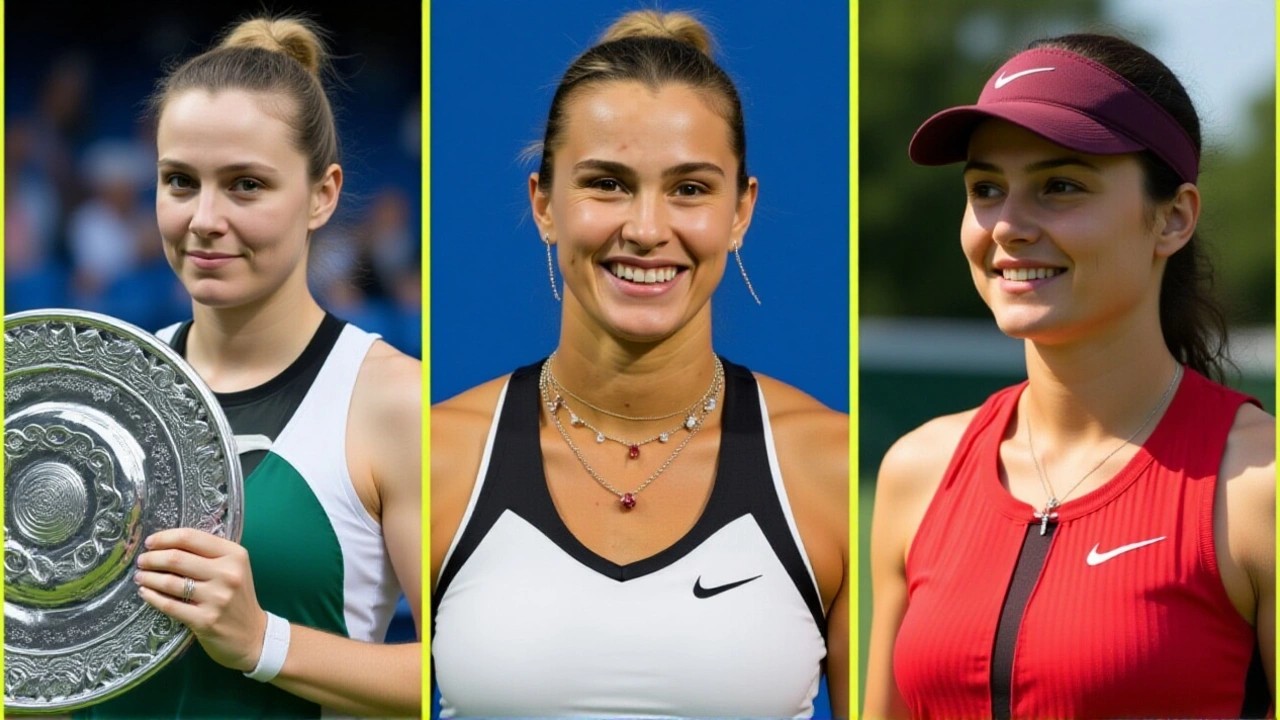
Sabalenka stays at No. 1 as Raducanu and Eala climb the WTA rankings, with Noskova also leaping ten spots. The shifts set the stage for the upcoming Japan Open.